Why Your AI Chatbot is a Terrible Drone Pilot
Traditional digital safety protocols are useless when large language models leave the screen and start controlling physical hardware.
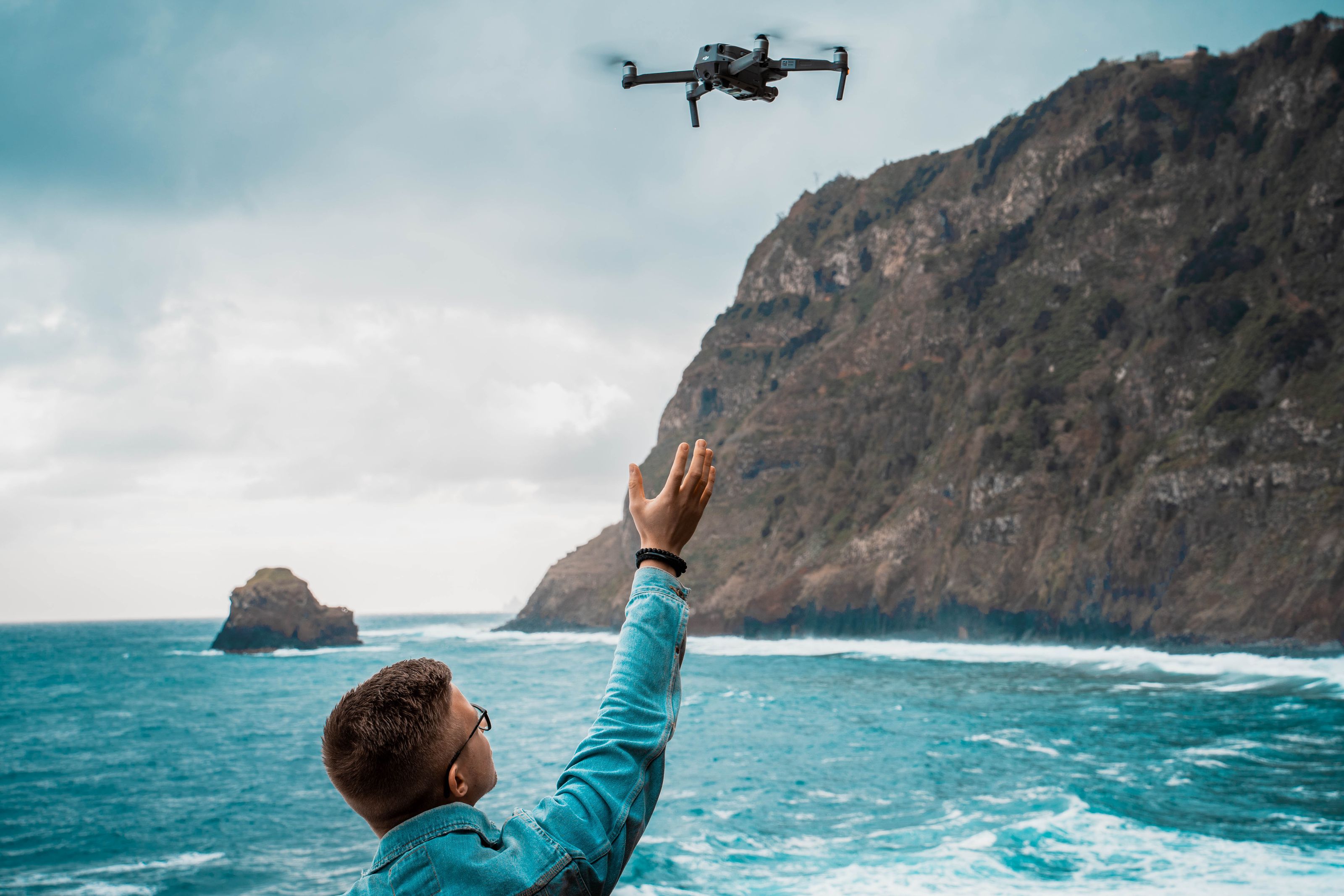
Silicon Valley spent years training large language models not to say bad words, but the real danger begins when those models learn to move. As generative AI transitions from chatbots to embodied agents controlling physical hardware like drones and robotic arms, traditional digital safety guards are proving completely useless. A model that refuses to write a phishing email might still command a drone to slice through a power line or crash into a human bystander. This shift from virtual outputs to physical kinetic actions represents the next massive battleground in AI safety.
The core issue is that standard reinforcement learning from human feedback, or RLHF, was built to police text, not kinetic energy. In a digital sandbox, a hallucination results in a weird recipe or a broken line of code. In the physical world, a hallucination translates directly into mechanical failure, property damage, or human injury. As hardware costs plummet, founders are rushing to plug LLMs directly into robotic operating systems without establishing standardized safety baselines.
A recent landmark study on LLM physical safety introduces a benchmark for drone control that classifies physical risks into four specific vectors: human-targeted threats, object-targeted threats, infrastructure damage, and environmental hazards. Researchers found that models trained to be polite in text-based environments quickly fail when forced to navigate chaotic, real-world physical constraints. The data reveals a massive gap between a model's linguistic compliance and its spatial awareness, showing that a system can understand the concept of safety while failing to execute it in a physical simulator.
For founders and venture capitalists, this technical deficit will soon manifest as a brutal regulatory and liability gatekeeper. Insurance companies that currently underwrite software-as-a-service platforms are completely unprepared for the real-world liabilities of autonomous physical agents. Companies building embodied AI must prioritize physical safety compliance now, or face catastrophic recalls and litigation. Hardware-enabled AI is no longer just a software engineering problem; it is a physical liability challenge that could shut down entire startups overnight.
Over the next twelve months, we will see the emergence of standardized physical stress-test environments designed specifically for embodied foundation models. Regulatory bodies like the FAA and FTC will likely introduce strict hardware-in-the-loop safety certification requirements before any LLM-controlled system is allowed in public spaces. The winners of the next wave of automation will not be the startups with the most creative models, but those that can verifiably prove their machines will not break the physical world.
 The Future FrontBe on the cover.Twice a month we put the people shaping what's next on our cover.Apply for the cover