Tesla Veterans Retool Factory Robots in Under Five Minutes
Factory lines usually take weeks to reprogram. Industrial Next uses AI foundation models to reconfigure robotic tasks in under five minutes.
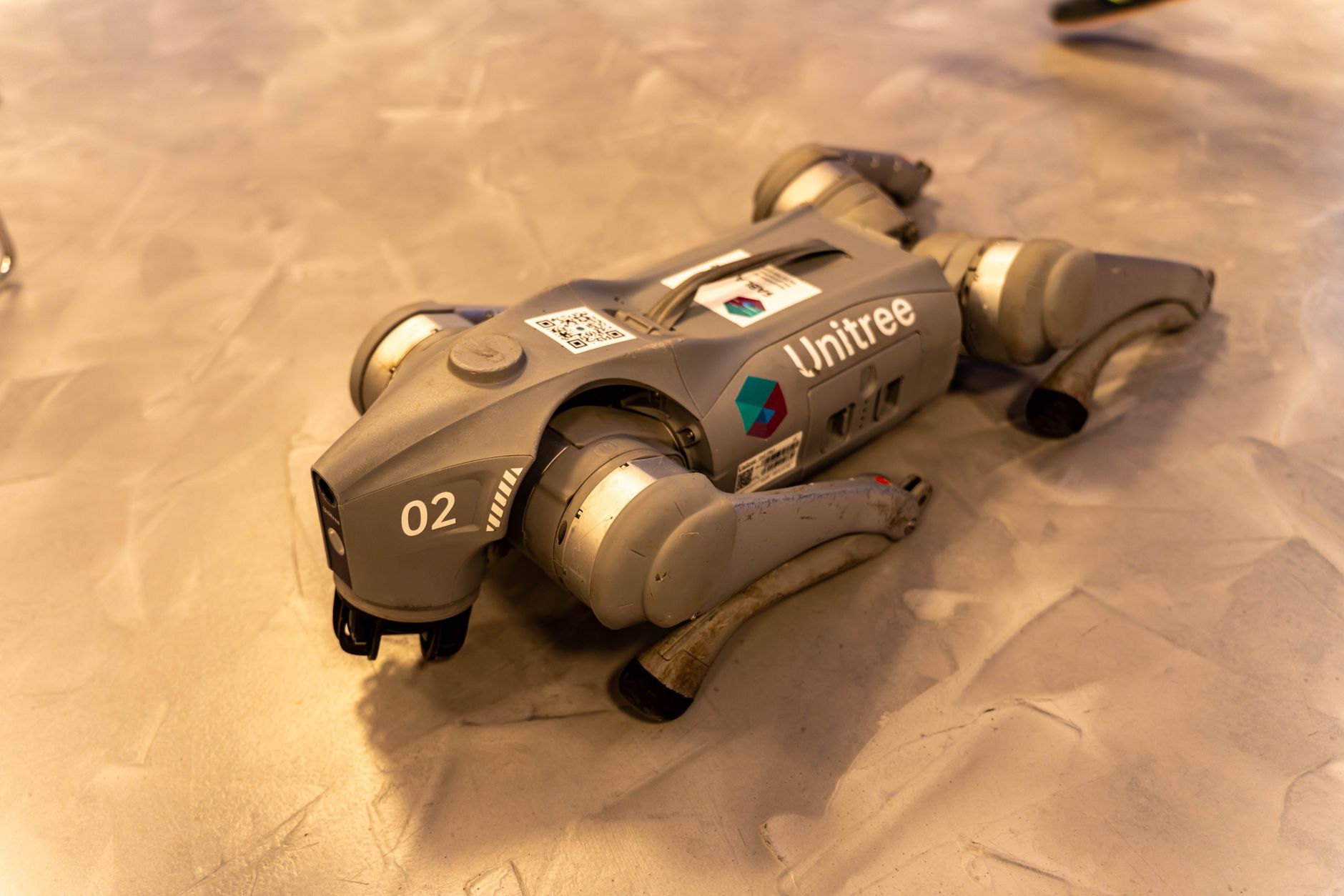
Retooling a traditional factory assembly line to handle a new component typically demands weeks of physical reconfiguration and expensive manual programming. San Francisco startup Industrial Next presented a software-defined alternative at TechCrunch Disrupt 2026, demonstrating modular robotic workstations that switch manufacturing tasks in under five minutes. Founded by former Tesla manufacturing engineers, the company replaces static, single-purpose assembly cells with self-contained units that adjust to new physical motions autonomously. The hardware units connect vision systems, operational context, and physical motion control through proprietary foundation models. By eliminating rigid integration bottlenecks, the architecture turns physical manufacturing lines into flexible assets capable of rapid, high-mix production.
The legacy industrial robotics framework relies on rigid, highly predictable execution where a machine performs one single task millions of times without deviation. When hardware founders or consumer electronics brands alter a product design, they face months of downtime and expensive custom integration fees paid to third-party engineering firms. This dynamic creates a severe friction point between fast software development cycles and slow, capital-intensive hardware scaling. Industrial Next targets this structural inefficiency by enabling factory machinery to reconfigure with the ease of updating software code. For industrial operators, this shift lowers the capital requirement for small batch manufacturing and drastically shortens time to market for complex physical products.
The startup's technology depends on a high-fidelity simulation engine that accurately mirrors real-world physics, allowing AI agents to master complex mechanical interactions in virtual environments before physical execution. Instead of relying on hard-coded scripts written by specialized engineers, the workstations learn novel manipulation tasks through simulated trials and brief human demonstrations. According to company disclosures reported by TechCrunch, Industrial Next workstations are already active in high-volume production facilities making one of the world's most prominent smartphones. Furthermore, the company announced a strategic partnership with the BMW Group Technology Office to test its AI-driven dexterous manipulation systems on automotive production lines. These commercial validation points show that multimodal foundation models can handle delicate physical assembly tasks that previously required human labor.
For venture investors and hardware founders, software-defined automation resets the fundamental economics of physical manufacturing. Heavy setup costs have historically made automated production lines unviable for mid-sized manufacturers or startups building products in quantities under fifty thousand units. Modular, fast-adapting robotic stations collapse those upfront expenditures, allowing flexible facilities to switch between disparate customer contracts in a single day. Emerging hardware startups can build complex physical devices locally without sinking limited capital into dedicated single-use assembly equipment. As spatial foundation models assume control of dexterous tasks, the primary advantage in manufacturing transitions from labor arbitrage and plant scale to algorithm quality and rapid adaptability.
Over the next twelve months, the deployment of foundation models in physical manufacturing will transition from pilot projects into core production environments. As launch partners like BMW evaluate modular stations across high-variance assembly lines, legacy automation giants will come under pressure to open their proprietary programming environments. Contract manufacturers will begin offering flexible, reconfigurable lines as a standard service to venture-backed hardware startups seeking low-volume production runs. By late 2027, the defining metric for industrial efficiency will move beyond units produced per hour to focus on how quickly an entire facility can pivot to produce a completely new hardware product.
 The Future FrontBe on the cover.Twice a month we put the people shaping what's next on our cover.Apply for the cover