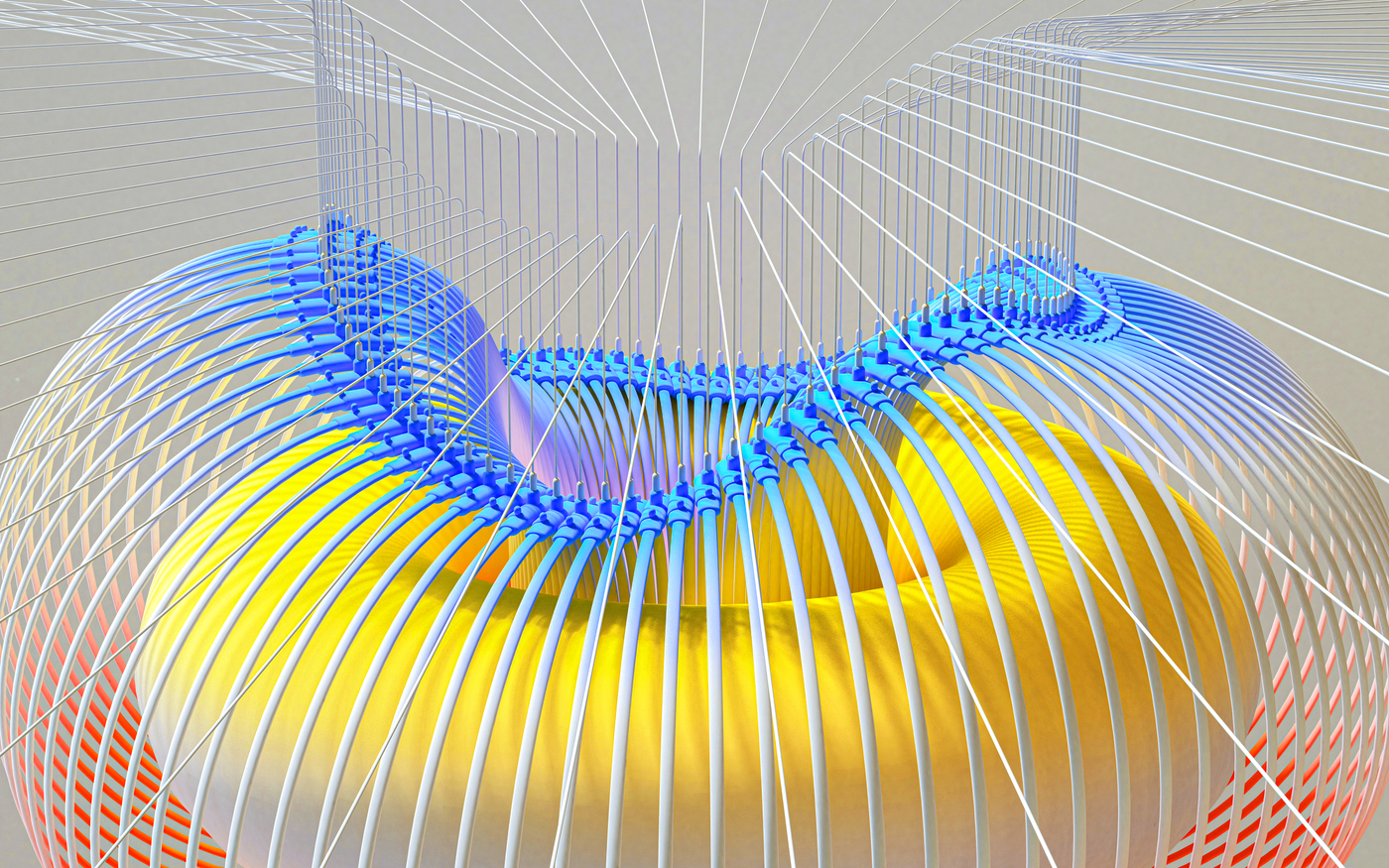
AI Is No Longer a Pilot. It's the Foundation.
Capgemini's 2026 research pinpoints the exact moment enterprise AI stops being a test and starts being the architecture everything else runs on.

The most important line in Capgemini's TechnoVision 2026 report is not about a product or a platform. It is a declaration of maturity: "AI moves beyond experimentation and enters a phase of maturity." After two years of pilots, proofs-of-concept, and board-level enthusiasm detached from production reality, the world's largest enterprises are now rebuilding their core architecture around AI, not alongside it. For founders and investors still treating AI as a feature layer, that distinction is the ballgame.
Capgemini's research institute, which draws on cross-industry data across its global client base, labels this shift the "AI Backbone" trend. The framing matters. A backbone is not optional infrastructure, it is the structure everything else depends on. Pascal Brier, Chief Innovation Officer at Capgemini, puts it plainly: "AI moves beyond experimentation and enters a phase of maturity," adding that last year's prediction of AI robotics becoming real, validated by Capgemini's own AI Robotics and Experiences Lab, gives the firm's 2026 forecasts unusual credibility. This is not a trend listicle. It is a capital allocation signal.
The second trend that demands attention is the rise of intelligent applications, software that reasons and adapts without human instruction at every step. This is the fastest-growing product category Capgemini flags for 2026, and it has direct consequences for SaaS founders. The static, workflow-driven app built to automate a repeatable process is being displaced by applications that can interpret context, adjust outputs, and improve continuously. Incumbents with large user bases but brittle, rules-based logic are suddenly exposed. Challengers who build reasoning into the core, not as an add-on, have a genuine wedge.
Cloud strategy is being rewritten in parallel. Capgemini identifies a "Cloud 3.0" era defined by hybrid, multi-cloud, and sovereign architectures, a direct response to regulatory pressure, data residency requirements, and the raw compute demands of running large models at scale. For investors, this signals sustained infrastructure spend. For founders, it means the assumption of a clean, single-cloud environment is increasingly a liability. Building for portability and compliance from day one is no longer a differentiator. It is a baseline expectation from enterprise buyers.
Over the next twelve months, the companies that moved early to build on AI infrastructure rather than bolt it on will begin compounding advantages that are difficult to reverse. Human-AI collaboration, the third pillar of Capgemini's report, will push enterprises to redesign workflows, org structures, and procurement criteria simultaneously. Founders who sell into the enterprise should expect buying committees to ask harder questions about AI integration depth, not just capability. Investors deploying into infrastructure or application layers should treat the Capgemini thesis as a directional map, not a guarantee, but one drawn from a firm that called AI robotics twelve months before the market caught up.
 The Future FrontBe on the cover.Twice a month we put the people shaping what's next on our cover.Apply for the cover