Yann LeCun Bets $1 Billion Against Large Language Models
Yann LeCun's AMI Labs raised $1.03 billion to replace text-predicting LLMs with world models capable of true spatial and causal reasoning.
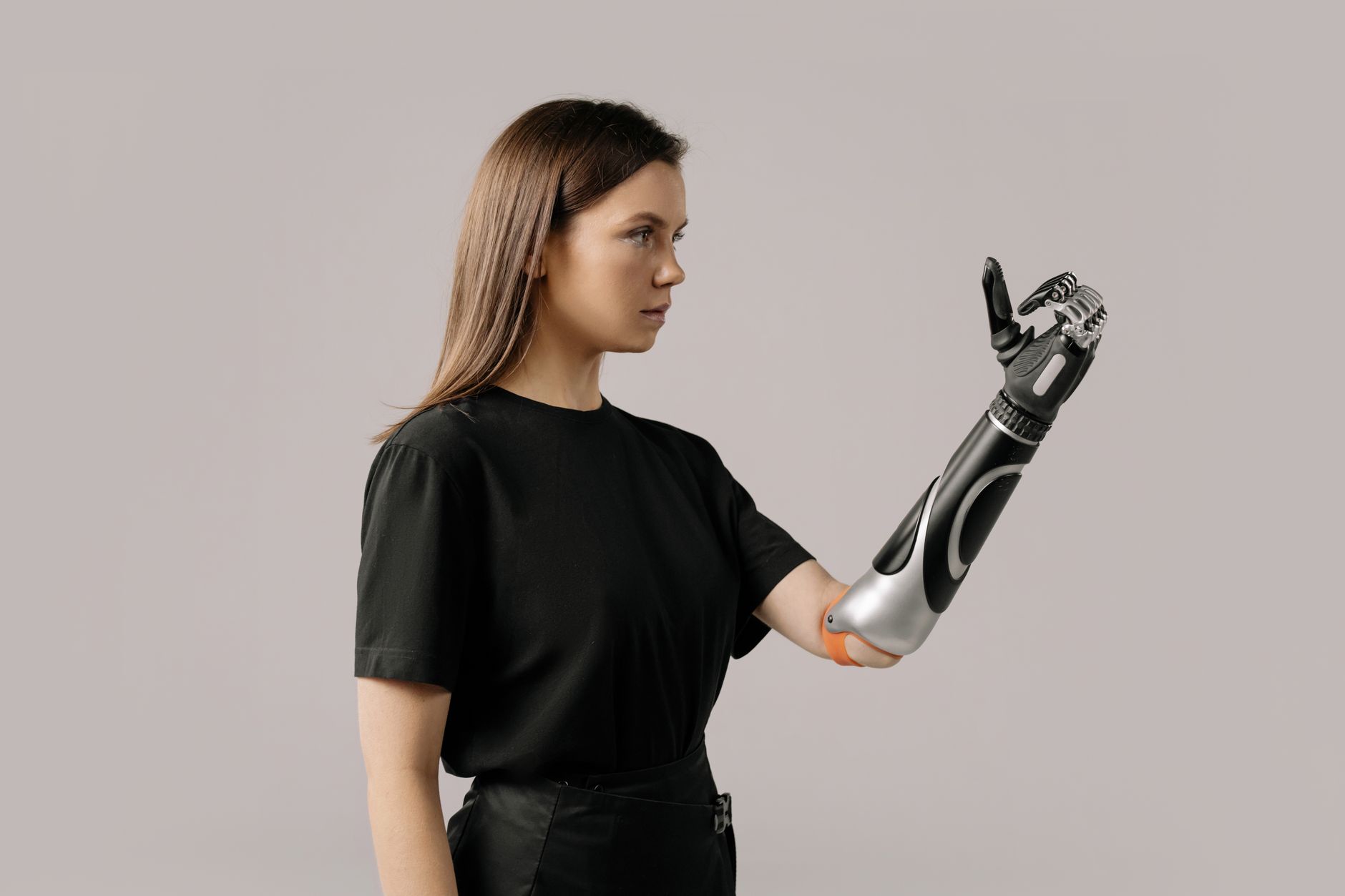
Advanced Machine Intelligence Labs closed a $1.03 billion seed round at a $3.5 billion pre-money valuation in March 2026, according to research reports published by Futurum Group. The deal stands as the largest seed funding round in European technology history, co-led by Cathay Innovation, Greycroft, Hiro Capital, HV Capital, and Bezos Expeditions. Founded by Turing Award winner Yann LeCun following his departure from Meta in late 2025, the Paris-based research venture is eschewing traditional generative language models entirely. Rather than scaling up autoregressive text prediction engines, AMI Labs is deploying its capital to construct persistent world models built to comprehend physical reality. This substantial early capital allocation signals a fundamental split in commercial AI research between raw textual generation and grounded spatial reasoning.
Enterprise interest in world models stems from growing frustration among engineering teams with the inherent boundaries of standard large language models. Autoregressive architectures generate text by calculating the statistical probability of subsequent tokens, yet they lack any internal representation of cause, effect, spatial geometry, or object permanence. While LLMs demonstrate proficiency at drafting corporate prose or writing software routines, they consistently fail when tasked with multi-step physical manipulation, visual planning, or high-stakes autonomous decision-making. As traditional scaling laws for text models hit diminishing returns and escalating compute costs, researchers increasingly acknowledge that true machine intelligence requires architectures capable of internalizing how the physical world moves, resists, and reacts.
To bypass these structural limitations, AMI Labs is commercializing LeCun's Joint Embedding Predictive Architecture, widely known as JEPA. Unlike standard generative models that consume compute power trying to reconstruct every raw pixel or token in a visual scene, JEPA predicts abstract representations directly within an embedding space. This architectural approach enables the system to ignore redundant environmental noise while accurately modeling critical structural interactions and physical dynamics. With founding participation from high-profile technology figures including Jeff Bezos and Mark Cuban, the company is targeting initial deployments in industrial manufacturing, physical robotics, and specialized healthcare devices. The initiative directly challenges the dominant brute-force scaling paradigm long favored by leading San Francisco labs.
For early-stage founders and corporate venture groups, this technical divergence marks a major strategic pivot point across the startup ecosystem. Over the past four years, venture capital flooded into thin application layers built on top of proprietary language model APIs. Now, as foundational text models undergo rapid commoditization, long-term venture value is concentrating around architectures capable of operating reliably within physical environments. Robotics companies, autonomous supply chain operators, and industrial simulation platforms require foundation systems that will not hallucinate basic physical constraints. Consequently, top-tier funds are rapidly shifting allocation strategies away from simple LLM wrappers and toward deep-tech engineering teams building non-autoregressive spatial intelligence.
Over the next twelve months, the artificial intelligence sector will see its first head-to-head performance benchmarks comparing JEPA-based world models against standard vision-language models. Commercial robotics and automated logistics facilities will serve as the primary proving grounds, with early enterprise pilots deploying initial AMI Labs frameworks onto factory floors. Early-stage founders who realign their technical roadmaps away from purely probabilistic token predictors and toward spatial predictive architectures will gain a distinct structural edge in talent acquisition and seed fundraising. As compute constraints force an industry-wide reassessment of base architectures, the winners will be the systems that understand physical reality.
 The Future FrontBe on the cover.Twice a month we put the people shaping what's next on our cover.Apply for the cover