NVIDIA's Nano Omni Rewrites the Edge AI Playbook
NVIDIA's Nemotron 3 Nano Omni delivers 9x the throughput of Qwen3-Omni on a single GPU, and that number should make every cloud-first AI founder nervous.
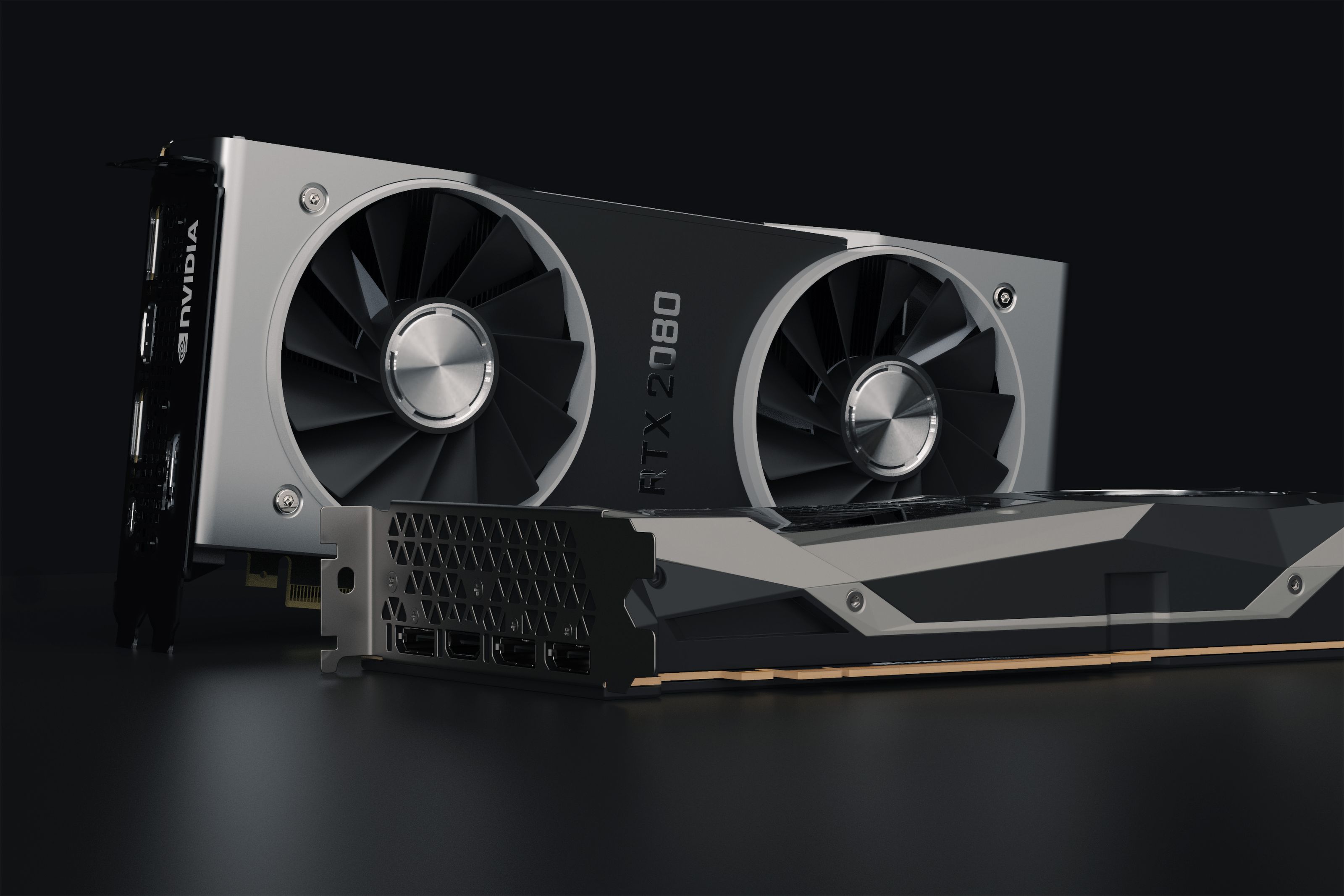
NVIDIA just made a pointed argument against cloud dependency. The company's newly released Nemotron 3 Nano Omni, a 30B-A3B multimodal model, hits 5,000 output tokens per second at maximum concurrency on a single NVIDIA B200, processing text, images, video, and audio from one compact deployment. At an iso-interactivity target of 50 output tokens per second per user, it delivers nine times higher output throughput than Qwen3-Omni on long-video workloads. For founders burning cash on inference costs, that is not a marginal improvement. That is a structural shift.
The timing matters. Multimodal AI is moving fast, but the dominant conversation has centred on frontier scale, not efficient scale. Google's Gemma series and Microsoft's Phi models have been chipping away at the small-model space, but neither has planted a flag as aggressively in the multimodal-plus-edge intersection as NVIDIA is doing here. Nemotron 3 Nano Omni is not a research demo. NVIDIA is releasing model checkpoints in BF16, FP8, and FP4 formats alongside portions of the training data and codebase, which signals a serious bid to become the default multimodal backbone for builders who cannot afford to pipe everything to a remote API.
The benchmark that stands out most is not raw speed. It is the cost-efficiency combination. On media tagging tasks, Nemotron 3 Nano Omni processed 9.91 hours of video per hour at an inference cost of $14.27, the best result across every model tested, open and closed-source alike. That is the Pareto-optimal corner: highest throughput and lowest cost on the same workload. For any startup building in video intelligence, content moderation, or media enrichment, that number reframes the entire build-versus-buy calculus on inference infrastructure.
The architectural framing is equally telling. NVIDIA positions Nano Omni explicitly as a sub-agent component, designed to handle perception, context maintenance, and multimodal understanding within larger orchestrated systems. It slots into modular agent stacks alongside Nemotron 3 Super and Nemotron 3 Ultra, which means NVIDIA is not just selling a model. It is selling a composable AI stack with Nemotron at every layer. Investors backing agentic AI infrastructure plays should read this as NVIDIA staking out the full-stack position before anyone else consolidates it.
Over the next twelve months, the pressure on cloud-only inference strategies will intensify sharply. As compact multimodal models reach production-grade reliability on single GPUs, the economics of routing every inference call to a centralised API will stop making sense for a widening class of applications. Founders building on-device products in healthcare, industrial automation, and media will have credible alternatives to hyperscaler dependency for the first time at scale. The race is no longer about who has the biggest model. It is about who owns the efficient one.
 The Future FrontBe on the cover.Twice a month we put the people shaping what's next on our cover.Apply for the cover


