North American Factories Are Finally Buying Robots at Scale
Industrial robot orders in North America surged 24.8% in Q3 2026, signaling a major shift from pilot tests to enterprise deployment.
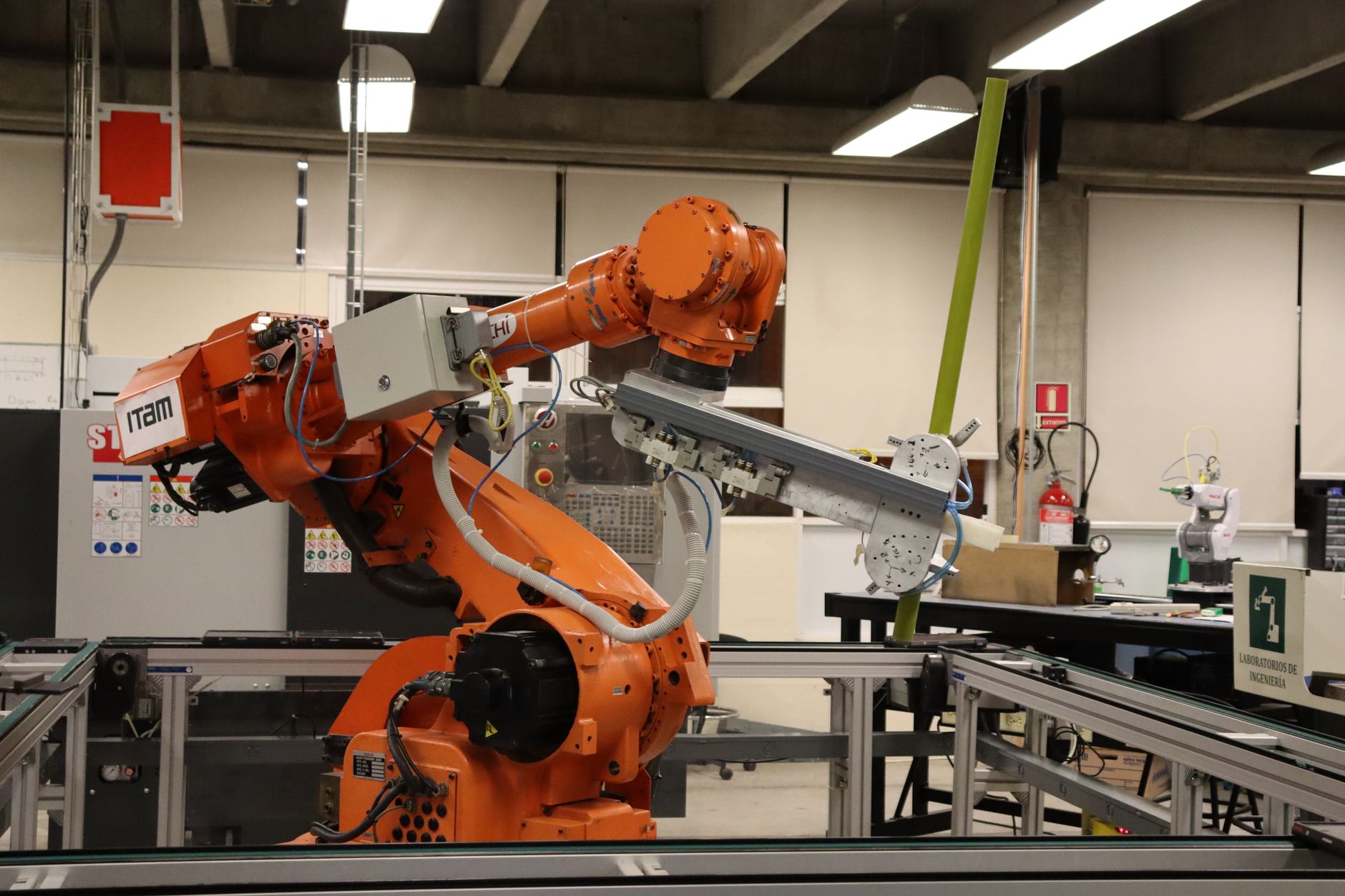
North American commercial enterprises purchased 10,989 industrial robots valued at $723.5 million during the third quarter of 2026, according to official market data released by the Association for Advancing Automation. The total represents a 24.8 percent increase in unit volume and a 26.1 percent rise in overall dollar value compared to the third quarter of 2025. This clear rebound marks the strongest single quarter for industrial hardware deployment in North America throughout 2026, climbing significantly from the 8,940 units recorded during the second quarter of the year. The sharp upward trajectory demonstrates that heavy industrial buyers are finally shifting balance sheet capital out of prolonged internal evaluation cycles and directly into equipment purchases on the factory floor.
For nearly two full years, hardware installations remained heavily constrained across North America as elevated interest rates and broader macroeconomic uncertainty caused corporate procurement teams to freeze major capital expenditure budgets. Most manufacturing executives restricted their automation efforts to small proof-of-concept projects and isolated collaborative robot tests. That prolonged period of structural hesitation is now coming to an end as domestic supply chain mandates in microelectronics and automotive production force rapid physical capacity expansion across the continent. Policy tailwinds from federal legislative programs alongside ongoing electric vehicle supply chain restructurings are compelling tier-one component suppliers to commit serious capital to long-term factory floor modernization.
Growth in the third quarter was largely propelled by specialized manufacturing segments rather than standard retail fulfillment operations. Orders placed by automotive component suppliers climbed 90.4 percent year over year, while procurement across semiconductor and electronics fabrication facilities surged by 97.6 percent over the exact same period. Alex Shikany, executive vice president at the Association for Advancing Automation, emphasized that the defining feature of the third quarter data is how broadly order growth was distributed across key industrial sectors. Collaborative robots also recorded a 56 percent increase in unit shipments, accounting for 16.7 percent of total quarterly orders across North America.
For early-stage robotics founders and venture capital investors, these expanded procurement figures fundamentally alter the commercial environment for physical automation startups. The historical bottleneck for hardware companies was rarely initial core technology, but rather the agonizing multi-year sales cycles required to convert small pilot deployments into broad commercial purchase orders. Rapidly accelerating demand within semiconductor fabs and automotive tier-one suppliers proves that enterprise buyers are finally willing to spend balance sheet cash on scalable autonomous systems. Early-stage software startups focusing on flexible vision processing, motion planning, and fleet management can now monetize by integrating directly into expanding robotic installations.
Over the next twelve months, North American robot order volume will likely sustain strong momentum as major semiconductor fabrication facilities across Arizona, Texas, and Ohio approach full operational capacity. System integrators will face intense commercial pressure to dramatically shorten installation timelines, creating high margin opportunities for synthetic training platforms and automated commissioning tools. Early-stage founders who target specialized material handling, precision assembly, and flexible quality inspection tasks will meet far more receptive enterprise buyers than they did during the preceding two years. This broad shift from conservative pilot programs to large volume capital commitments establishes a durable foundation for automated domestic manufacturing across North America.
 The Future FrontBe on the cover.Twice a month we put the people shaping what's next on our cover.Apply for the cover