London Tech Week 2026: Infrastructure Is the New AI Bet
London Tech Week 2026 is rewriting the AI conversation — and compute infrastructure, not foundation models, is stealing the show.
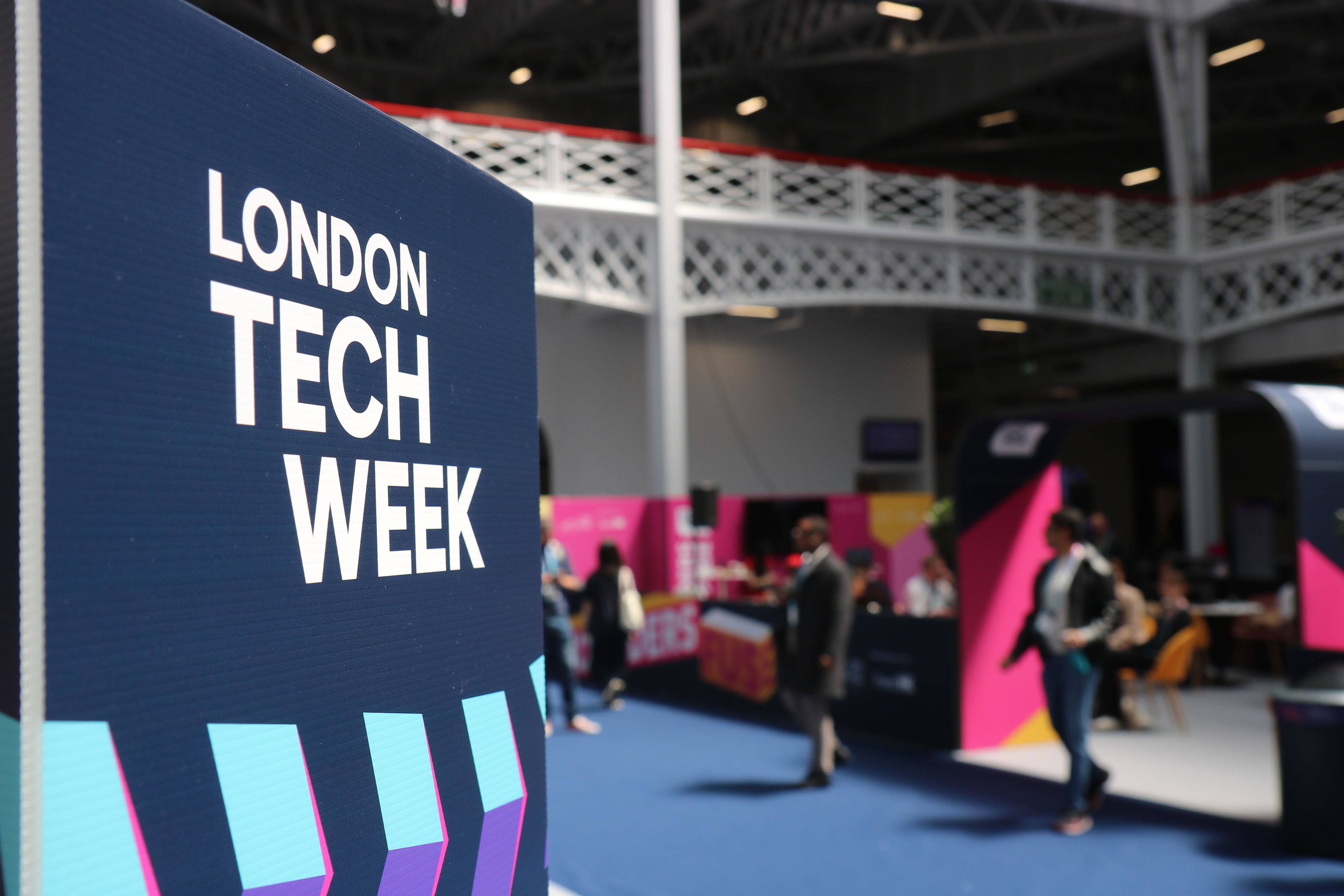
Thirty thousand attendees. Five days. One unmistakable signal. London Tech Week 2026, running 8 to 12 June at the ExCeL, has made its editorial thesis clear from the opening keynote: the next big opportunity in AI is not the model layer, it is the infrastructure underneath it. The headline session, "Building the Compute Foundation for the AI Era," featuring Mayor Sadiq Khan alongside Brent Hoberman CBE and Baroness Martha Lane Fox, set the tone for an event where compute, data strategy, and sovereign AI capacity are crowding out the chatbot conversation entirely.
This shift in framing matters. For the past two years, European founder and investor energy has been pulled toward foundation model races dominated by US and Chinese incumbents. London Tech Week 2026 is making the case that the smarter play sits one layer down: the chips, the data centres, the enterprise pipelines, and the regulatory scaffolding that makes AI deployable at scale. Tom Adeyoola, Executive Chair of Innovate UK, delivered the opening keynote on the Founders Stage, anchoring the event's commercial ambition to a government-backed innovation mandate.
The speaker roster reinforces how seriously the UK is threading government into its AI industrial strategy. The Rt Hon Liz Kendall MP, Secretary of State for Science, Innovation and Technology, and Kanishka Narayan MP, Minister for AI and Online Safety, both took the stage, signalling that policy and private capital are being asked to move in the same direction at the same time. Separately, a dedicated AI Arena session asked whether quantum computing will drive the next wave of AI breakthroughs, a question that would have seemed premature at any European tech event twelve months ago. The agenda also tackled workforce adoption directly: Julian David OBE, CEO of techUK, led a fireside chat on achieving workforce buy-in to AI transformation, acknowledging that deployment friction, not model capability, is the real bottleneck most enterprises face.
For founders, the Capital and Growth track is the one to watch. Sessions on "The New Reality of Startup Value in the AI Era" and "The Next Wave of AI: Building, Scaling and Winning from the UK" reflect a funding environment that is growing more selective and more infrastructure-literate. Investors are no longer asking whether a startup uses AI. They are asking whether it controls a defensible position in the stack, whether that is proprietary data, compute access, or enterprise integration depth. The presence of AWS UK and Ireland VP Alison Kay and Airwallex co-founder Lucy Liu on the same programme signals that both hyperscalers and high-growth fintechs are treating infrastructure alignment as a strategic priority, not a technical footnote.
Over the next twelve months, expect the conversation that started this week in London to accelerate into capital allocation. European sovereign compute initiatives will move from policy papers to procurement. Founders who have been quietly building in infrastructure, enterprise data tooling, and AI deployment layers will find themselves in a significantly stronger fundraising position than those chasing model-layer differentiation. London Tech Week 2026 did not just reflect the current moment. It made a credible argument for where the durable value in the AI era actually gets built.
 The Future FrontBe on the cover.Twice a month we put the people shaping what's next on our cover.Apply for the cover


