Industrial AI Moves From Factory Pilots to Enterprise Scale
Q3 2026 market data shows capital pouring into industrial AI integration as manufacturers abandon pilots for full enterprise automation rollouts.
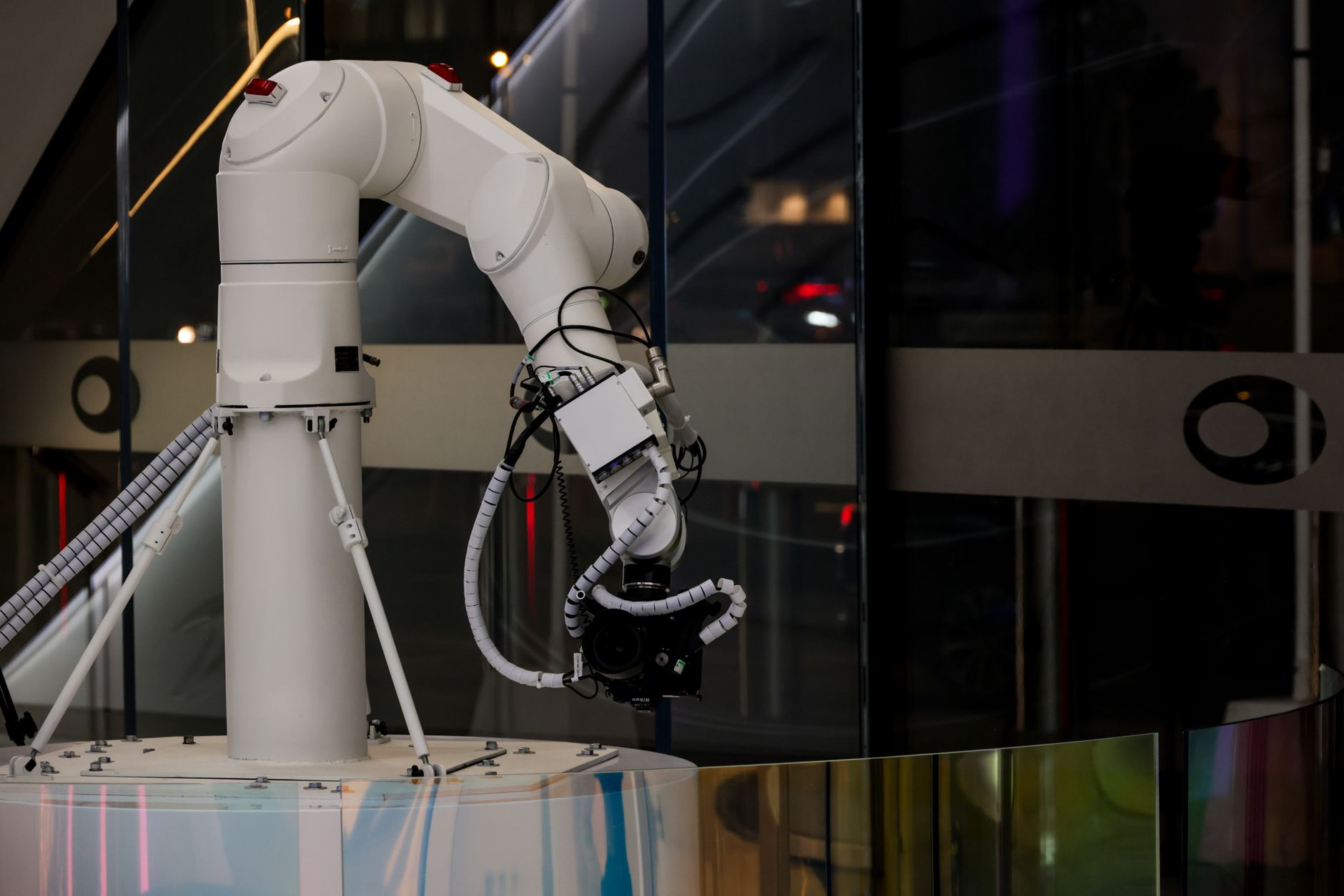
Financial capital activity in industrial automation jumped to 44 deals in the third quarter of 2026, up from 26 in the second quarter, according to a report published by Blue River Financial Group. The rebound brings total deal volume back in line with early-year benchmarks while M&A transaction counts held steady at 16 closed deals. Public market valuations for automation leaders expanded sharply, with median enterprise value to EBITDA multiples reaching 21.4x compared to 19.2x in the prior quarter. Driven by sustained growth at firms like Rockwell Automation and Cognex, the data indicates that capital allocations are moving beyond experimental technology. Industrial artificial intelligence has officially transitioned from small-scale factory pilots into full enterprise deployments.
For years, manufacturers treated AI-driven robotics as experimental line items, testing computer vision and autonomous mobility in isolated cells without altering primary shop-floor software. That incremental phase has ended as rising labor costs and supply chain constraints force executives to mandate deep structural integration. Factory managers no longer want isolated software tools that require custom code for every machine on the floor. Instead, purchasing decisions now favor software layers that connect directly into legacy programmable logic controllers and existing enterprise resource planning software. This shift marks a distinct maturation phase where operational reliability outweighs novel hardware capabilities.
The financial data reveals a clear divergence between private middle-market transactions and public market enthusiasm. Private middle-market valuation multiples remained firm at 7.3x enterprise value to EBITDA in 2026, up from historical averages of 6.6x to 6.9x seen between 2023 and 2025. Major corporate players posted solid operational metrics to match, with Siemens Industry recording five percent comparable revenue growth and Schneider Electric delivering 6.2 percent organic growth in industrial automation. Meanwhile, Rockwell Automation reported organic sales expansion exceeding four percent, illustrating consistent enterprise appetite for automated systems despite broader economic friction. Private equity buyers and strategic consolidators are actively competing for companies that demonstrate defensible gross margins and clear integration roadmaps.
For venture investors and startup founders, this market transition alters the playbook for physical automation investments. Early-stage funding is migrating away from capital-intensive custom hardware designs toward deployment software, interoperability tools, and automated calibration platforms. Building hardware remains expensive, but building the middleware that allows heterogenous fleets of robots to communicate with decades-old manufacturing execution systems yields high software margins. Startups that can reduce deployment timelines from six months to six days are winning enterprise contracts and securing higher valuations. Investors now possess concrete quantitative metrics regarding what industrial buyers are willing to pay for scalable software that unlocks physical operational efficiency.
Over the next twelve months, the market will likely see an acceleration of tuck-in acquisitions as legacy equipment vendors acquire specialized software startups to defend their hardware margins. Corporate buyers will continue prioritizing targets that solve the bottleneck of integration downtime rather than buying standalone robotic hardware. Early-stage founders who focus on retrofitting existing factory infrastructure rather than demanding total hardware replacements will dominate upcoming funding cycles. As public comps remain elevated around 21x EBITDA, liquidity options for venture-backed automation platforms will expand through both strategic M&A and secondary private markets. The industrial AI boom is no longer about proving the technology works, but about scaling it across thousand-factory footprints.
 The Future FrontBe on the cover.Twice a month we put the people shaping what's next on our cover.Apply for the cover