Delta Brings Embodied AI to Factory Dual-Arm Robots
Delta Electronics unveiled an embodied AI robot platform that replaces hardcoded motion scripts with real-time neural execution on assembly lines.
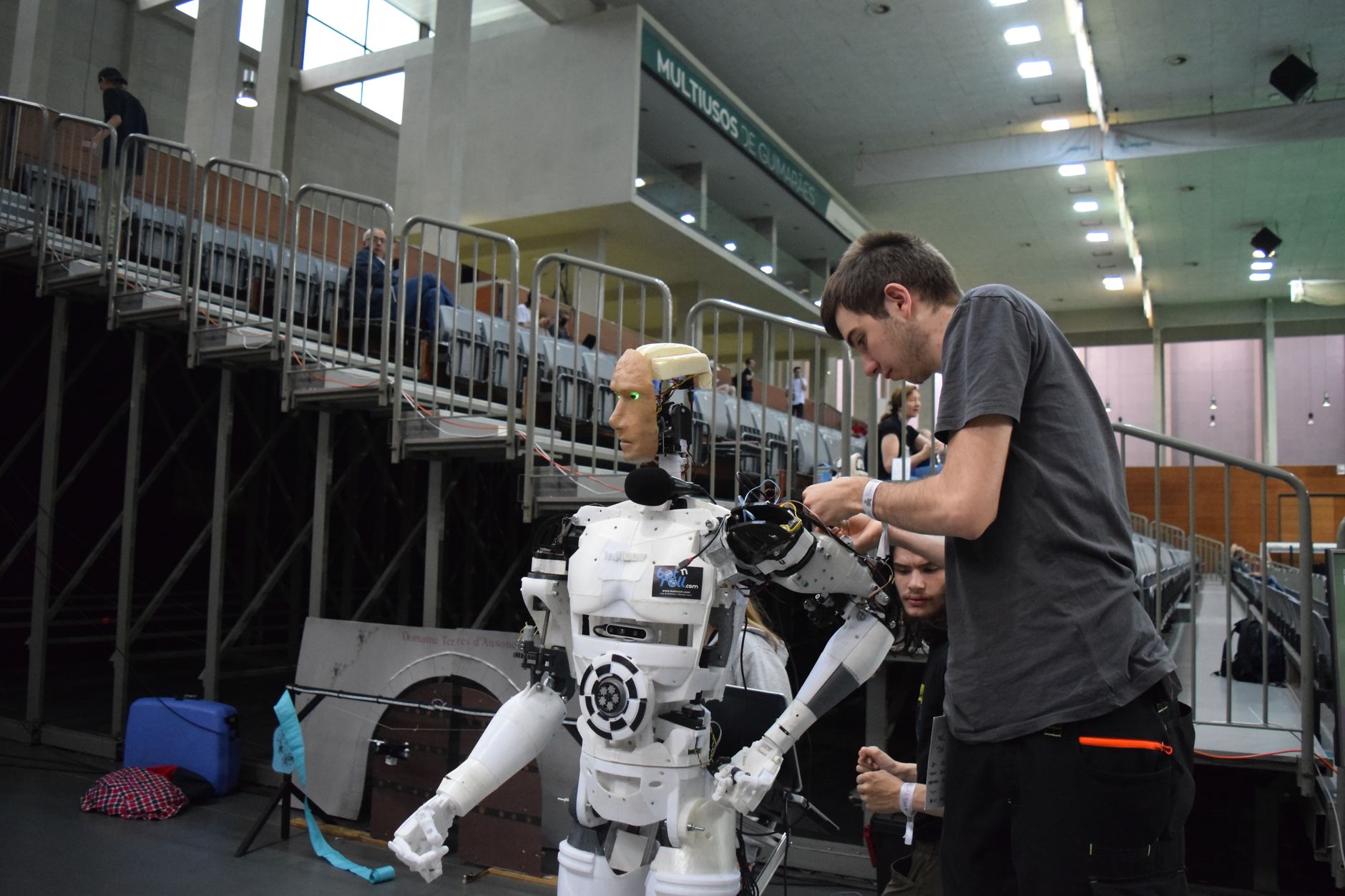
At Automation Taipei 2026 in Taiwan, global industrial equipment leader Delta Electronics debuted its Embodied AI Dual-Arm Robot Platform, signaling a fundamental transition in assembly line design. Rather than relying on traditional pre-programmed code written for static, highly repetitive tasks, Delta built a system that integrates neural networks directly with real-time motion controllers. During its 55th anniversary showcase at the Taipei Nangang Exhibition Center, the company demonstrated the dual-arm apparatus receiving open-ended voice prompts and independently generating complex artistic drawings in requested styles. The demonstration illustrates how real-time task understanding is moving rapidly out of academic research laboratories and into production-ready factory hardware.
For decades, high-precision factory automation faced severe structural limits regarding operational flexibility and line reconfiguration. Traditional industrial arms require teams of specialized automation engineers to manually script every trajectory, velocity profile, and safety interlock, turning product line changeovers into lengthy, capital-intensive engineering projects. As global manufacturers confront persistent skilled labor shortages and growing commercial demand for short-run customized goods, deterministic programming has become a major operational bottleneck. Embodied artificial intelligence replaces rigid manual scripting with flexible inference models capable of converting natural language instructions into precise spatial movements. This technological shift fundamentally changes the underlying economics of industrial retooling and equipment utilization.
Delta integrated multimodal perception models and high-speed robotic control onto a single computing architecture to eliminate latency between sensory perception and physical execution. According to technical specifications released by Delta Electronics at the exhibition, the dual-arm system manages the end-to-end operational pipeline from initial task instruction down to physical motor execution. By evaluating object geometry and spatial surroundings in real time, the platform executes complex physical manipulations without requiring human programmers to calibrate fixed coordinate systems. Factory floor data indicates that replacing hardcoded motion paths with continuous neural control significantly reduces changeover times while enabling hardware to handle natural variations in component placement during assembly.
This platform rollout offers critical strategic lessons for venture capital investors and early-stage robotics founders. Much of the recent investment activity in physical artificial intelligence targeted general-purpose humanoid robots, which continue to face steep challenges around power efficiency, physical durability, and high unit economics in production environments. Established industrial vendors like Delta are pursuing a more immediate commercial route by adding task-aware intelligence directly to proven dual-arm mechanical form factors. As a result, venture capital dollars are redirecting toward low-latency control software, sensor fusion algorithms, and domain-specific foundation models built specifically for existing industrial hardware.
Over the next 12 months, the industrial deployment of embodied control software will transition from experimental pilot projects into standard factory operational specifications. Major industrial automation vendors will introduce native artificial intelligence stacks across their primary motion controller lineups, reducing reliance on third-party integration software. Early-stage AI startups will focus heavily on securing enterprise partnerships with hardware OEMs to access high-quality synthetic and physical operational data. As these unified control platforms reach high-volume production floors, the key metric for manufacturing competitiveness will shift from pure mechanical speed to real-time algorithmic adaptability.
 The Future FrontBe on the cover.Twice a month we put the people shaping what's next on our cover.Apply for the cover