Why Robots Are Leaving Detroit Behind
As automotive giants slow their factory upgrades, a new wave of buyers is quietly keeping the robotics industry afloat.
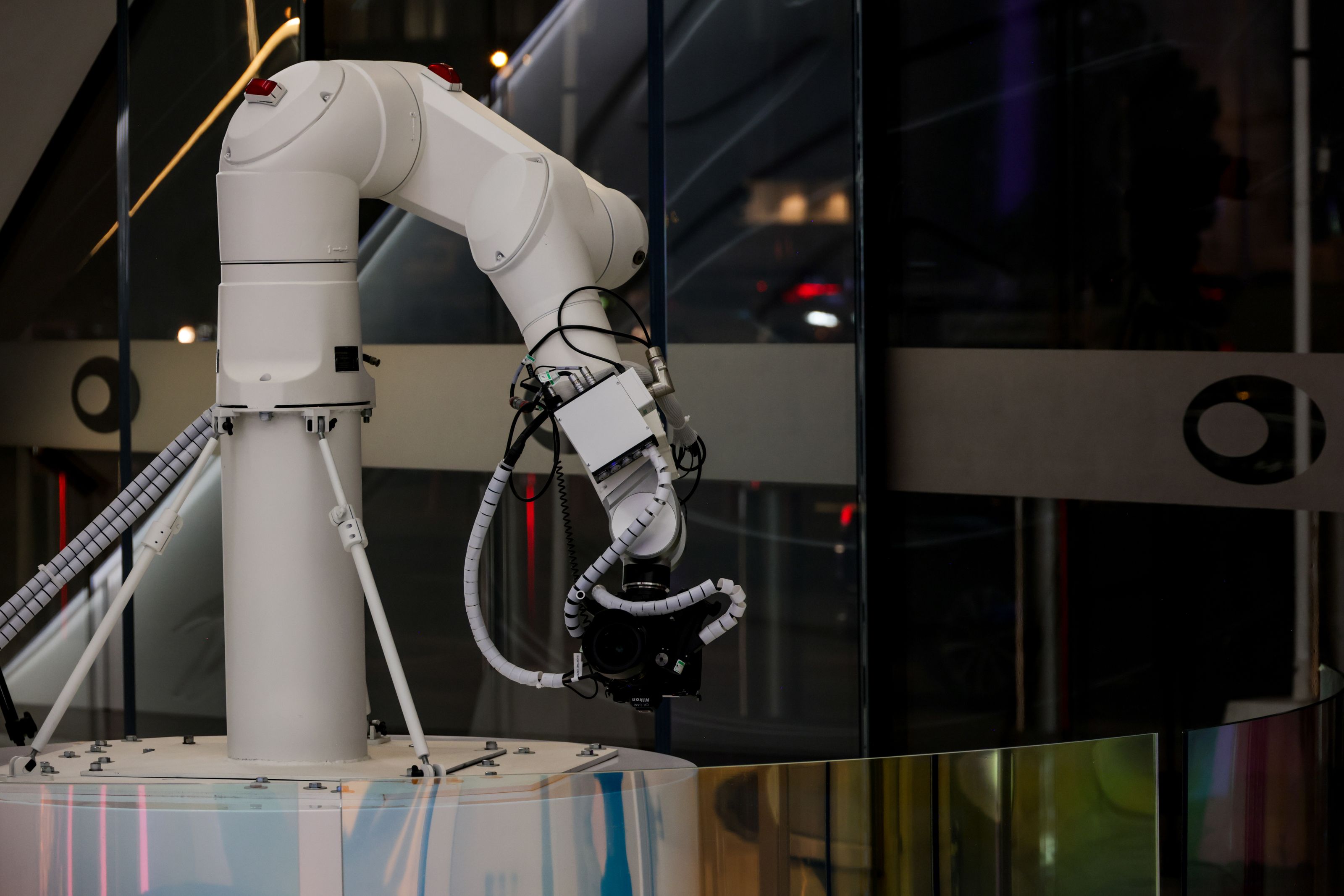
North American companies ordered exactly 9,055 industrial robots valued at $543 million in the first quarter of 2026. While that flat baseline looks unremarkable on the surface, the underlying mechanics of the industrial market have shifted profoundly. The traditional automotive giants that historically bankrolled the robotics sector are scaling back their purchases. In their place, a highly fragmented and diverse group of non-automotive buyers is quietly keeping the entire automation market stable.
For decades, robotic arm deployment was almost entirely synonymous with car assembly lines and heavy metal fabrication. This deep structural dependence made hardware startups highly vulnerable to the notoriously cyclical capital expenditure budgets of massive carmakers. The current shift signals a permanent structural decoupling from this single-point-of-failure model. As legacy automotive brands scale back their electric vehicle factory expansions, a dozen other industries are stepping in to fill the vacuum.
Fresh data from the Association for Advancing Automation reveals that the automotive slowdown is being offset by double-digit gains in life sciences, electronics, and food processing. Collaborative robots, designed to work safely alongside human employees without protective cages, are leading this new wave of adoption. These non-automotive buyers are prioritizing smaller, more flexible units that require far less customized integration engineering. This trend proves that industrial automation is finally transitioning from a highly specialized capital project into a flexible operational utility.
This diversification forces a rapid and necessary pivot for robotics founders and venture capitalists who have long targeted automotive scale. Startups can no longer build sustainable business models that rely on securing one or two massive contracts with Tier-1 automotive suppliers. Sales pipelines must be re-engineered to efficiently acquire and onboard hundreds of mid-sized clients across food logistics, packaging, and assembly. The hardware players that survive this transition will be those building modular, software-driven systems that can be redeployed within hours.
Over the next twelve months, expect a rapid market consolidation among niche hardware vendors that fail to adapt to this fragmented sales landscape. Venture capital will increasingly abandon heavy capital-intensive hardware in favor of software-first platforms that simplify robot programming for non-technical managers. The robotics startups that raise successful rounds in 2027 will not be those selling the strongest mechanical arms, but those offering the absolute easiest deployment. Detroit may have built the early robotics industry, but general enterprise buyers are about to inherit its future.
 The Future FrontBe on the cover.Twice a month we put the people shaping what's next on our cover.Apply for the cover