ThreadMoat Is Drawing the Map of Industrial AI, and Asking Who Actually Buys
Michael Finocchiaro's ThreadMoat tracks more than 1,300 young companies building AI for engineering and manufacturing, with the investors who fund them and the customers who buy from them, so the industry can see past the hype.
Industrial AI has a noise problem. Every week brings another company promising to change how products are designed, simulated and built, another funding round, another bold claim about the factory of the future. For the people who have to make real decisions, the investor weighing a deal, the software vendor looking for a partner, the manufacturer choosing what to put on the shop floor, the hard part is not finding names. It is knowing which of them matter.
ThreadMoat was built to answer that. It is an independent market intelligence platform for engineering and manufacturing software, mapping more than 1,300 young companies in over 50 countries across Engineering AI, Physics AI, Industrial AI and Physical AI. For each one, it shows the investors behind it and the customers buying from it, and the map is updated every week.
"Every startup in this market claims to be the future," says Michael Finocchiaro, who founded ThreadMoat. "The useful question is who is actually deployed, who funds them and who buys them."

Who builds, who funds, who buys
That question shapes the whole platform. Rather than ranking companies by how loudly they market themselves, ThreadMoat organises the field into 10 investment domains and 58 market segments, so a reader can move from the big picture to a single niche in a few clicks and see who is genuinely active there.
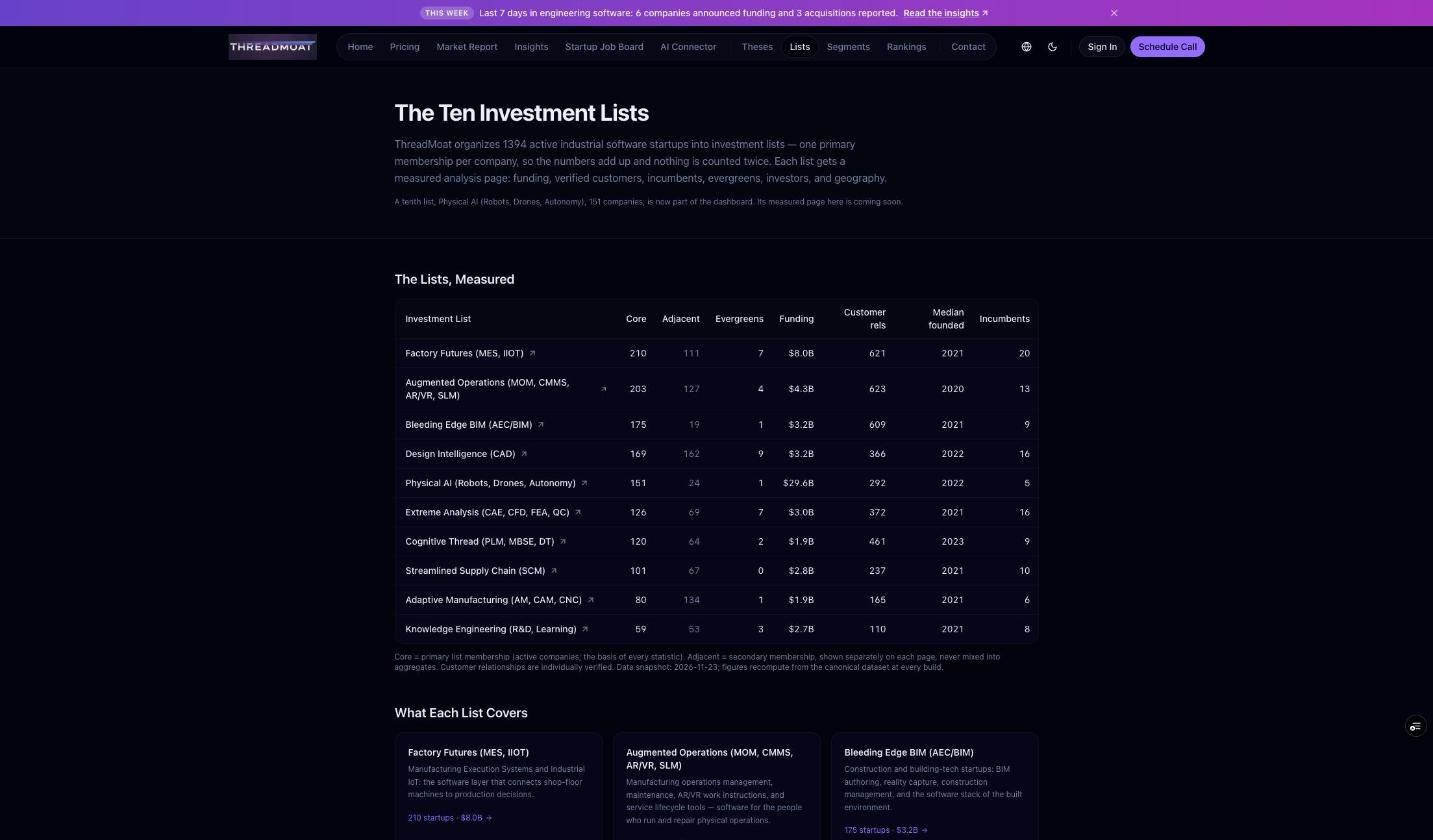
You can explore the map at threadmoat.com. Around it, ThreadMoat has built a set of tools for people who need to go deeper: quarterly market reports; 13 buyer's guides for teams choosing software; and a weekly job board listing more than 5,000 roles at over 350 companies, a useful signal in its own right of where the market is hiring and growing.
The research behind it is hands-on. ThreadMoat has held more than 200 conversations with founders, and more than 150 registered users now rely on the platform. It has also formed a strategic partnership with Cambashi, the industrial technology analyst firm.
Independence as the product
In a market crowded with sponsored rankings and pay-to-appear directories, ThreadMoat's most important feature may be what it refuses to sell. There is no paid placement in the data. A company appears on the map because it is building something in the space, not because it bought its way in.
That independence is what makes the map useful to all three of its audiences at once. Investors can use it to spot gaps and compare deal flow. Software vendors can see which young companies are worth partnering with, or competing against. Manufacturers can check who is actually deployed before they commit time and budget to a pilot.
A familiar voice in engineering software
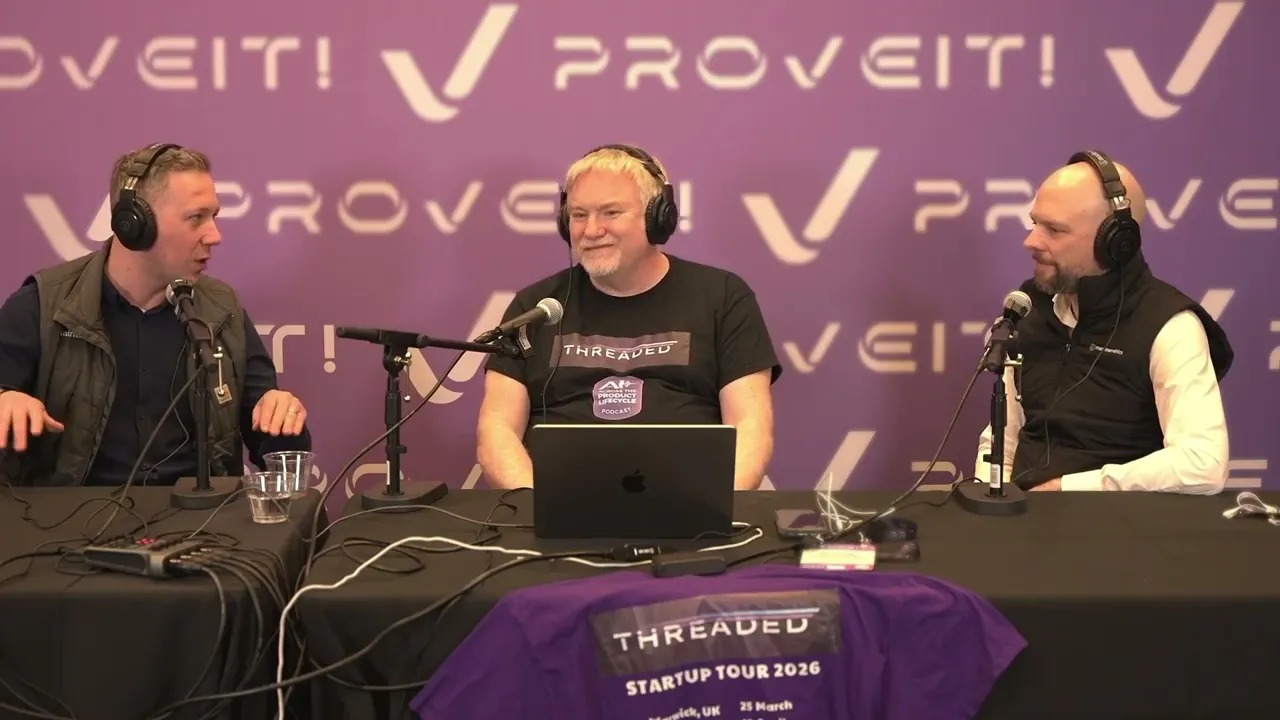
Finocchiaro is well known in the world of product lifecycle management. He hosts the AI Across The Product Lifecycle Podcast, writes the Demystifying PLM blog and runs the threaded.live conference, and his commentary reaches more than 31,500 followers on LinkedIn and over 7,500 newsletter subscribers. ThreadMoat draws on that same network of people building, funding and buying engineering software.
His view of where the industry is heading is direct. AI models are good at producing likely answers, but factories and engineering teams need certainty.
"Industry needs deterministic answers from probabilistic models," Finocchiaro says. "Whoever closes that gap earns trust, and trust is the new moat."
Why it matters now
As AI moves deeper into engineering and manufacturing and more capital follows it, the cost of backing the wrong company, or buying the wrong tool, goes up. A clear, independent map of who is doing what becomes more valuable with every new round.
ThreadMoat's bet is that the companies that win in Industrial AI will be the ones that earn trust, and that the market needs a trusted place to see them. Its name says as much: in a field where everyone claims an edge, the real moat is credibility.
Explore the map at ThreadMoat.
 The Future FrontBe on the cover.Twice a month we put the people shaping what's next on our cover.Apply for the cover