Solar Dethrones Wind in the US Clean Power Mix
Utility-scale solar just became the US grid's top clean energy source, and the capital flows that follow will reshape energy infrastructure investing for a decade.
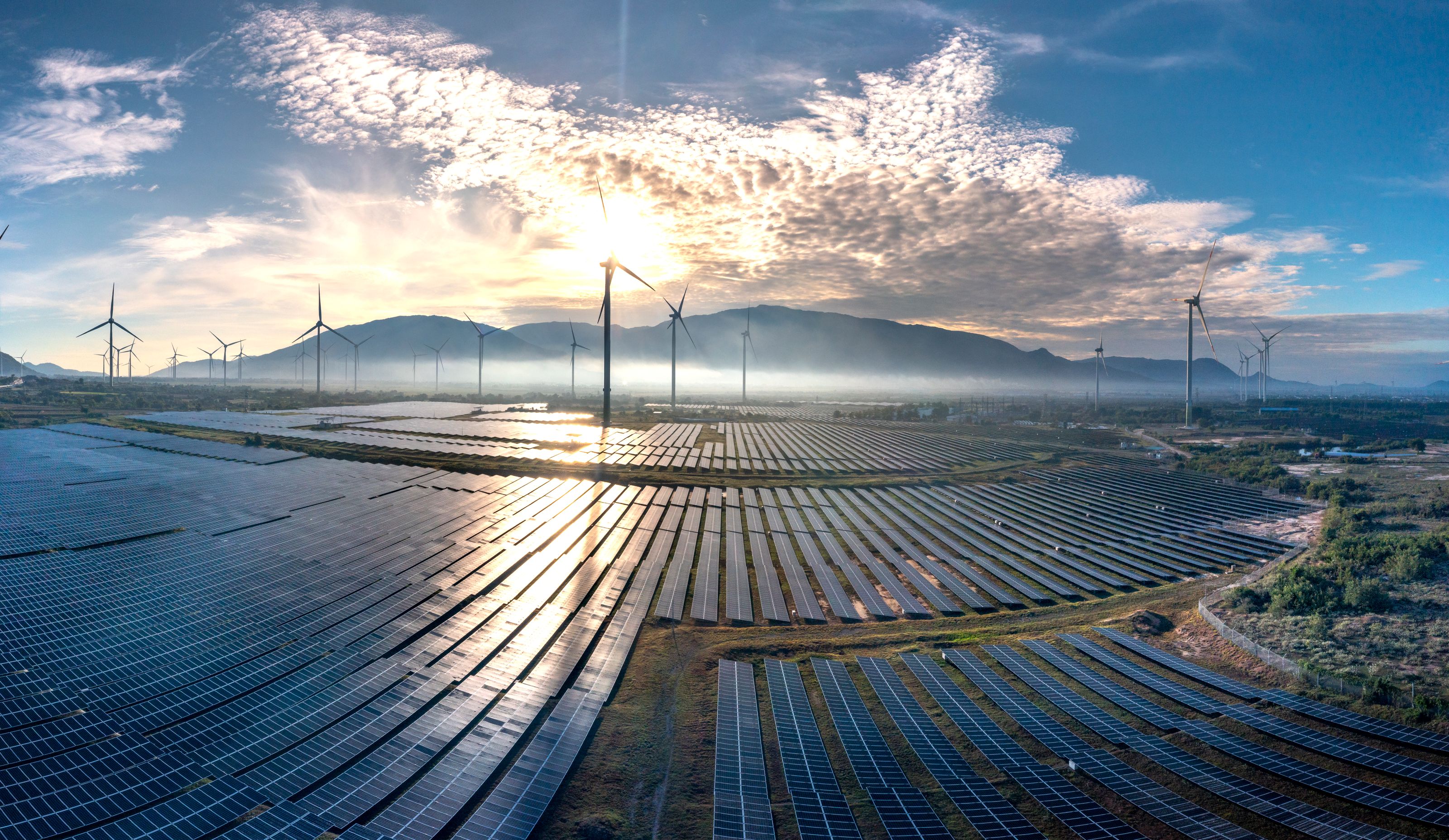
For the first time in American energy history, utility-scale solar has overtaken wind as the largest source of clean power on the US grid. Combined utility-scale and small-scale solar capacity now stands at 247,534 MW, outpacing wind's 167,102 MW by a margin that would have seemed implausible five years ago. The US Energy Information Administration projects that 99% of new generating capacity added in 2026 will come from solar, wind, and batteries, with solar leading the charge. This is not a trend. It is a structural inflection point.
The speed of the shift matters as much as the shift itself. In Q1 2026 alone, US developers brought 6.4 GW of new utility-scale solar, wind, and storage capacity online, pushing total domestic clean power past 370 GW, according to the American Clean Power Association. Solar's cost curve and deployment velocity have simply outrun every competing technology. What began as a subsidized experiment is now the default infrastructure choice for grid operators, developers, and increasingly, corporate buyers with long-dated power purchase agreements to fill.
The investment implications are immediate and specific. Solar's intermittency profile differs fundamentally from wind's, meaning the grid's dominant generation source now produces power in sharp midday peaks rather than the more distributed output wind provides. Co-located battery storage goes from a nice-to-have to a structural requirement. The EIA forecasts roughly 69,500 MW of new utility-scale renewable and battery storage capacity added in 2026, a figure equivalent to the output of 70 nuclear power plants. Startups building grid-balancing software, long-duration storage, and transmission optimization tools are no longer pitching a future problem. They are solving a present one.
Capital allocation is already repricing. Infrastructure funds that spent the last decade overweighting wind assets now face a portfolio rebalancing question. Solar hardware margins remain thin, but the value has migrated upstream into land acquisition, permitting velocity, and interconnection queue positioning, and downstream into storage, ancillary services, and demand-response platforms. For venture investors, the actionable layer sits in the software and services stack that makes a solar-heavy grid manageable, not in the panels themselves. Grid modernization is no longer a regulatory talking point. It is a revenue opportunity with a measurable bottleneck.
Over the next 12 months, the pressure on grid infrastructure will intensify before it eases. Transmission constraints and interconnection backlogs will slow some solar deployments, creating a wedge opportunity for startups that can accelerate permitting, optimize existing capacity, or offer virtual power plant aggregation at scale. Storage procurement will accelerate sharply as grid operators confront the duck curve at a scale they have not managed before. The solar era on the US grid has begun. The infrastructure stack built around it is still wide open.
 The Future FrontBe on the cover.Twice a month we put the people shaping what's next on our cover.Apply for the cover




