Physical AI Hits the Factory Floor
MassRobotics' RoboWeek 2026 made one thing clear: Physical AI is no longer a lab experiment, it's a capital allocation decision.
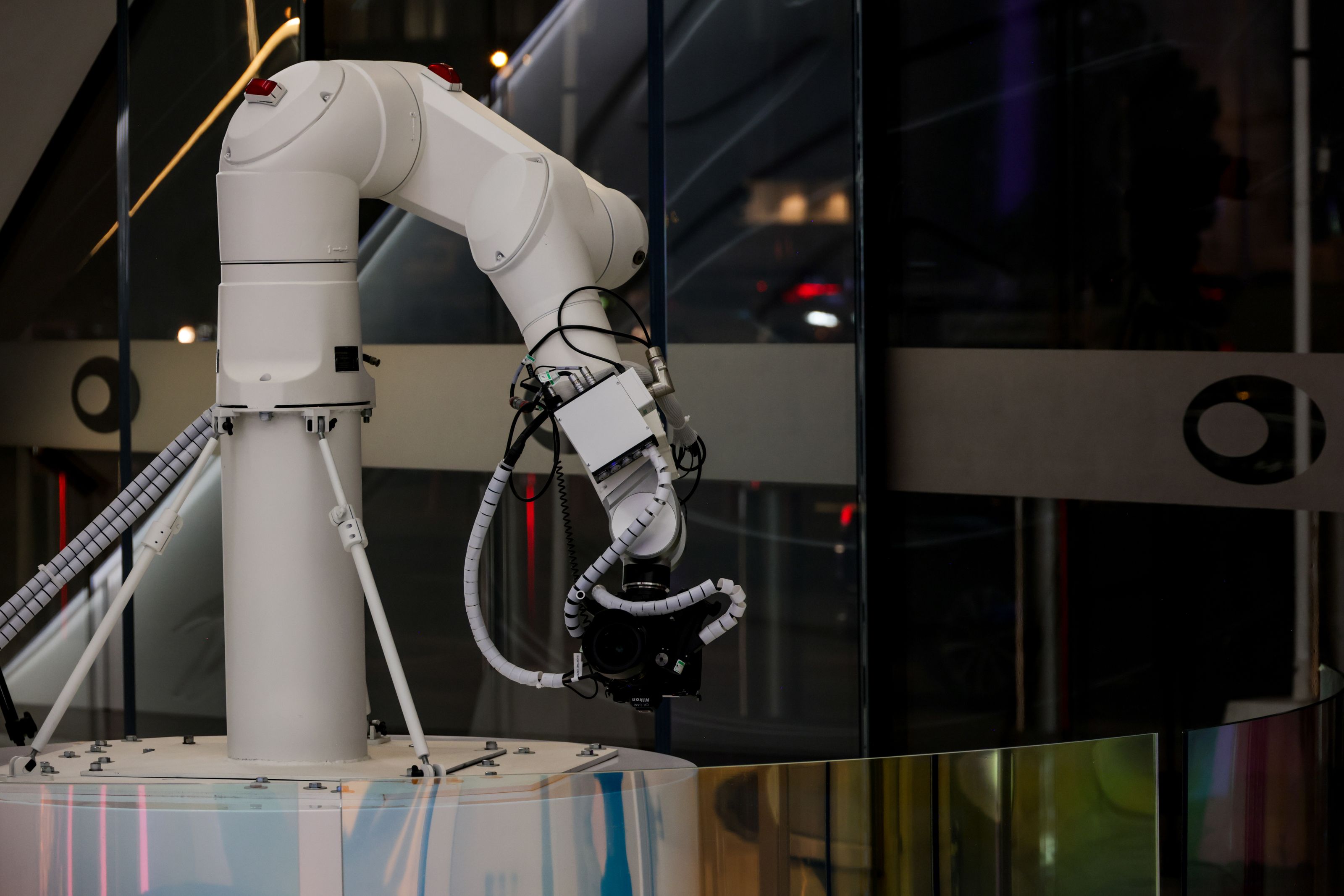
The robotics industry is heading for a shakeout. That was the blunt assessment from Andy Lonsberry, CEO of Path Robotics, at National Robotics Week 2026, hosted by MassRobotics in Boston. His message was pointed: demo videos no longer move capital. AI systems that prove value through actual deployment and measurable revenue are the ones winning customers and investor confidence. Physical AI, intelligent systems that operate autonomously in real-world manufacturing environments, has crossed a threshold. The conversation is no longer about whether it works. It is about which deployments are generating returns.
RoboWeek 2026 arrived at a pivotal moment for the sector. Skilled labor shortages across manufacturing, logistics, and shipbuilding are accelerating adoption timelines that would otherwise stretch years further. The event brought together operators, founders, and capital allocators to assess where AI-driven automation is delivering measurable productivity gains, not projected ones. MassRobotics, as the convening institution, used the week to surface concrete industry benchmarks, the kind of deployment-stage data that separates credible robotics companies from those still living off pitch decks.
The signal from 2026 is that specialization wins. Lonsberry specifically called out application-focused physical AI, citing welding robots in shipbuilding as the archetype: narrow scope, hostile environment, quantifiable output, genuine labor gap to fill. Universal Robots and NVIDIA co-hosted a separate MassRobotics session in February 2026, featuring live industrial demonstrations with partners SICK and Inbolt, underlining how the platform layer is maturing fast. The infrastructure for deploying physical AI at scale, sensors, edge compute, human-robot interfaces, is no longer experimental. It is available, and the integrators who move now build durable competitive moats.
Workforce development sat alongside automation as a central theme this year, and that framing matters for investors. Scaling physical AI is not purely a hardware and software problem. It requires parallel investment in training pipelines that prepare workers to collaborate with autonomous systems rather than be displaced by them. The founders building this category intelligently are treating human-robot collaboration as a product feature, not a PR afterthought. Capital flowing only to the machine and ignoring the operator layer is likely to fund deployments that stall at the integration stage.
Over the next twelve months, expect the market to compress hard around proven deployment cases. Generalist robotics platforms will struggle to hold valuation multiples as customers demand vertical specificity and documented ROI. The winners will be companies with repeatable deployment playbooks in high-labor-cost, high-hazard environments, welding, logistics sortation, precision assembly, where the labor alternative is genuinely unavailable. Investors who used RoboWeek 2026 as a signal-gathering event are already repositioning toward deployment-stage companies. Those who did not will be catching up by Q1 2027.
 The Future FrontBe on the cover.Twice a month we put the people shaping what's next on our cover.Apply for the cover




