DeepSearch Intelligence Wants Risk Teams to See the Network, Not Just the Name
Rome's DeepSearch Intelligence uses AI, entity resolution and graph analytics to show how companies, owners and counterparties connect, turning scattered corporate data into intelligence for high-stakes decisions.
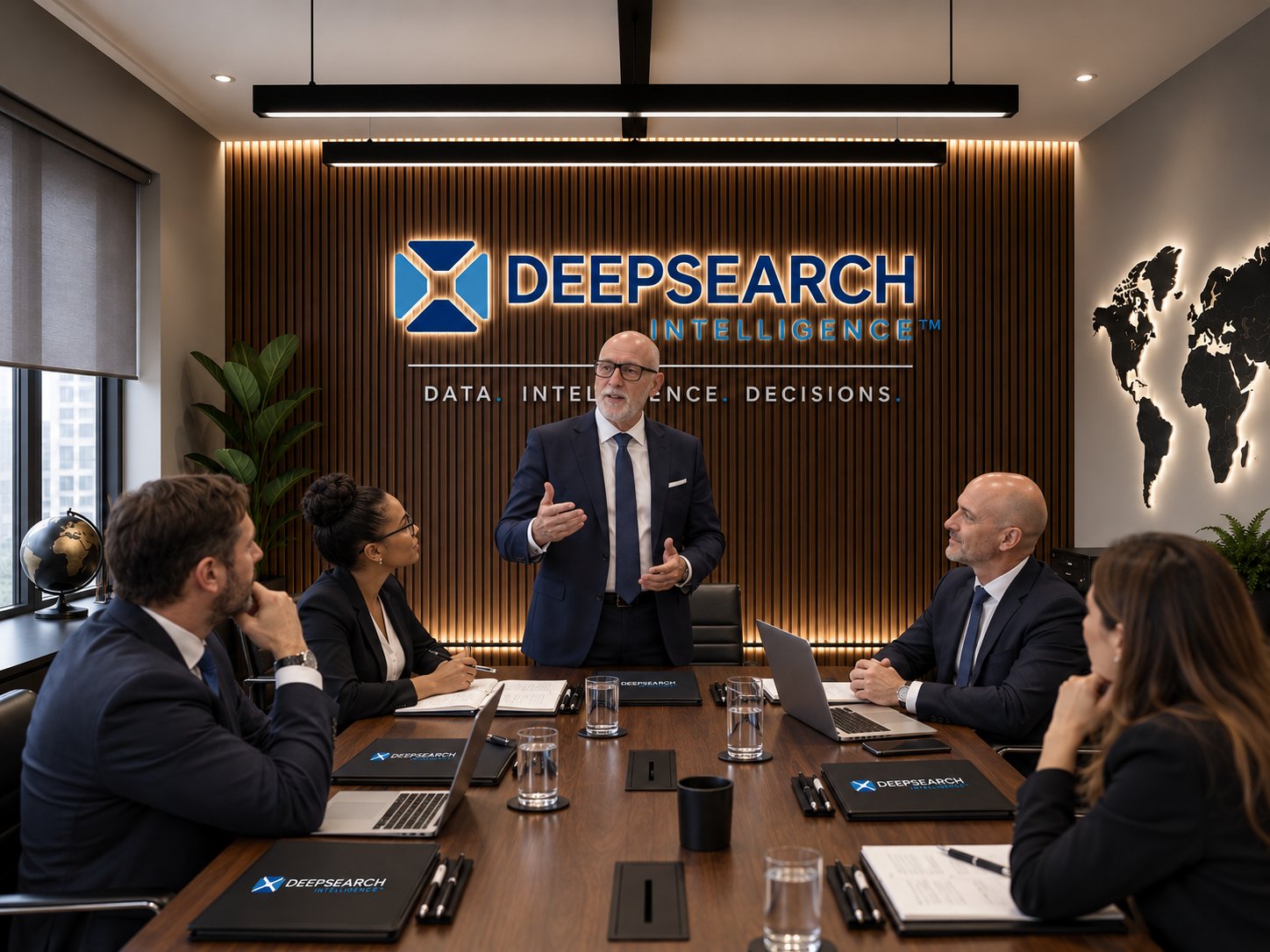
Ask a compliance officer what keeps them up at night and the answer is rarely a shortage of data. Company registries, sanctions lists, court filings and news archives are all a few clicks away. The hard part is seeing what sits between those records: the holding company behind a supplier, the director who turns up on three other boards, the beneficial owner hidden two jurisdictions away.
That blind spot is the opportunity DeepSearch Intelligence has built its business around. The Rome-based company launched its platform this month and calls what it does "Decision & Network Intelligence". The phrase matters. DeepSearch isn't trying to be one more place to look things up. It wants to be the layer that reads all those places at once and tells a team how the pieces fit together.
Born from 25 years of fieldwork
The idea didn't start in a lab. Founder and CEO Salvatore Piccinni has spent more than a quarter of a century in corporate intelligence, due diligence, strategic risk and fraud prevention. For much of that time, untangling a counterparty meant analysts piecing together ownership charts by hand, cross-checking spellings, chasing filings across borders and hoping nothing slipped through.
DeepSearch is, in effect, that experience turned into software.
"Companies do not suffer from a lack of data," Piccinni says. "They suffer from the difficulty of understanding how data, entities and relationships connect."
Why one record is never enough
Consider a bank onboarding a new corporate client, or a manufacturer vetting a supplier in a new market. A standard screening tool checks the company's name against a list and returns a result. But risk rarely sits in the name on the form. It sits in the network around it: a parent company registered somewhere opaque, a shareholder linked to a sanctioned entity, a pattern of directors moving between firms that have each failed before.
Spotting those links manually is slow, expensive and easy to get wrong, especially when the same person or company appears under slightly different names in different countries. As ownership structures grow more international, the problem only gets harder.
How DeepSearch reads the network
The platform gathers information from public sources, official registers, media and licensed data providers, then goes further than a search engine in three ways.
**It works out who is who.** Entity resolution matches records that describe the same company or person even when the names, spellings, languages or identifiers don't line up, one of the quiet headaches of any cross-border check.
**It maps the relationships.** A knowledge graph connects companies, people, assets and events, so an analyst can follow an ownership chain to its end, see clusters of related firms and pick up indirect exposure that a single-entity search would never surface.
**It turns the map into something usable.** The output is structured and traceable, ready to support the real work: due diligence, AML and KYC checks, beneficial-ownership analysis, supplier and third-party risk, M&A reviews, litigation and asset tracing.
The scale behind that is considerable. According to the company, the platform covers more than 400 million companies and entities and 1.5 billion ownership relationships, including some 156 million beneficial owners.
Made for the people who sign off
DeepSearch's customers are the ones who live with the consequences of a bad call: banks and financial institutions, law firms, investment funds and family offices, insurers and large industrial groups, along with the compliance, legal, risk, financial-crime and internal-audit teams inside them.
The company is deliberate about where the technology stops. Its findings are designed to support a professional's judgment, not replace it. Nothing the platform produces is an automated verdict, and every result is meant to be reviewed by a person who understands the context.
A software business at heart
Although the analysis it makes possible is deep, DeepSearch is built as a technology company rather than a consultancy. The core is a subscription platform organised into a dozen modules, covering areas such as ownership and beneficial owners, AML and KYC, graph intelligence, asset and supply-chain intelligence, and continuous monitoring with alerts. Customers can connect through APIs and enterprise integrations, and specialist analysts are on hand for the most complex cases, but the platform remains the product.
That model gives DeepSearch recurring revenue and room to grow into new markets without rebuilding its foundations each time.
Why the timing is right
The pressure on risk teams is rising on several fronts at once. Sanctions regimes have multiplied and change quickly. Europe is tightening its anti-money-laundering rules and placing more weight on knowing who really owns a company. Supply chains stretch across more countries than ever, and regulators increasingly expect firms to know not just their customers, but their customers' connections.
Each of those trends pushes in the same direction: away from simply having access to information, and towards understanding it. That is exactly the shift DeepSearch is betting on.
Scaling from Rome
DeepSearch Intelligence was set up in Rome in July 2026, and its technology is already in use. The company came to Slush in Helsinki this month to meet investors, technology partners and potential customers, and is now weighing a €1.5 million equity round to speed up sales, deepen enterprise integrations and expand internationally, starting with Europe and looking next to the Middle East, where cross-border corporate activity and regulatory complexity are both high.
"Our ambition is not to build another data provider," Piccinni says. "We are building the intelligence layer that sits above fragmented data sources."
As the volume of available information keeps climbing, that layer may prove to be where the real value lies. Finding data has never been easier. Knowing what it means once everything is connected is the harder question, and the one DeepSearch Intelligence has set out to answer.
Learn more at DeepSearch Intelligence.
 The Future FrontBe on the cover.Twice a month we put the people shaping what's next on our cover.Apply for the cover